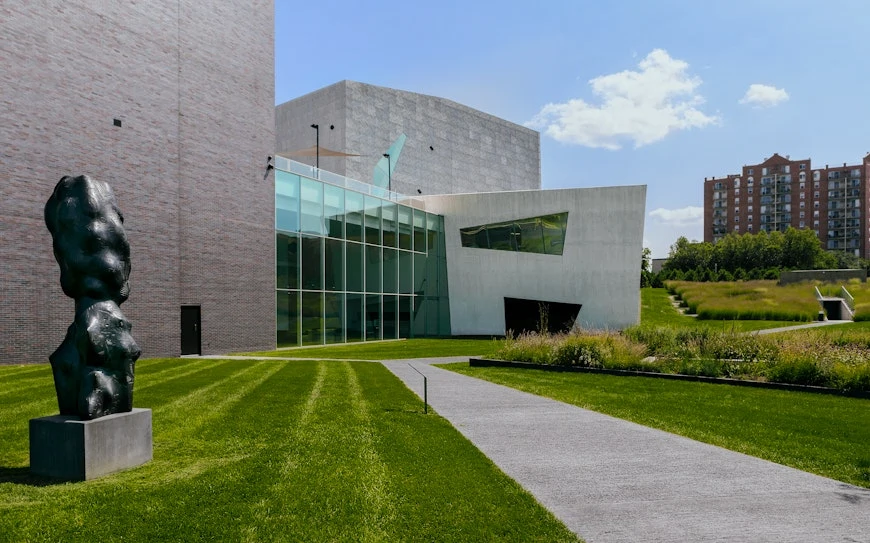
General Info
Mission: To be a catalyst for new ideas and to foster dialogue between artists and the public.
Founded: 1879 (as a private collection), opened to the public in 1940.
Location: Minneapolis, Minnesota.
Collection Size: Over 13,000 objects.
Key Focus Areas: Modern and contemporary art, media arts, sculpture, performance, design.
Walker Art Center: The Birth of a Modern Icon
The Walker Art Center has a long history that began in 1879 as the private collection of businessman and patron T. B. Walker. His dream was to create a place where the public could enjoy art. It wasn’t until 1927 that his collection became the foundation for a public art gallery, which later evolved into the Walker Art Center in 1940. This marked a turning point, solidifying the center’s role as an institution that looks to the future rather than simply preserving the past.
A Pioneer of Modernism
The Walker Art Center was one of the first museums in the United States to dedicate itself to modern and contemporary art. Instead of focusing on historical collections, the center supported living artists and the development of new art forms from its very beginning. This bold approach made it a true pioneer, a catalyst for innovation that has influenced the art landscape across the country and far beyond.
A Focused Collection
The Walker Art Center‘s collection, which includes over 13,000 pieces, is known for its focus on contemporary art, particularly sculpture and performance art. However, its special pride is the media arts collection, one of the oldest and most comprehensive in the world. It includes video, film, digital works, and new technologies, making the Walker Art Center an ideal place to explore the impact of technology on art.
An Evolving Mission
The mission of the Walker Art Center is to be a “catalyst for new ideas.” The center actively engages with the community, organizes educational programs, and fosters interdisciplinary dialogue, connecting art with architecture, design, and science. This constant evolution ensures that it remains at the forefront of cultural innovation, always ready to explore the pressing issues of our time.
A Hub for Contemporary Dialogue
The Walker Art Center is renowned for its innovative and often provocative exhibitions. The center presents the work of artists who push the boundaries of art and frequently organizes projects that combine visual arts, dance, theater, and music. This approach makes the Walker Art Center not just a place to view paintings but a vibrant space for creative experimentation and cultural dialogue.
Three Notable Works
“Spoonbridge and Cherry” (1988) by Claes Oldenburg and Coosje van Bruggen: One of the center’s most famous works, located in its sculpture garden. The enormous sculpture of a spoon with a cherry on top highlights the playfulness and monumentality of Pop Art.
“TV Garden” (1974) by Nam June Paik: This media installation, part of the collection, consists of dozens of televisions placed among live plants. The work explores the relationship between nature, technology, and media, fitting perfectly with your website’s theme.
“Red Painting” (1966) by Sam Gilliam: An important work from the collection belonging to the Color Field movement. This piece, made of flexible canvases, shows how artists expanded the boundaries of painting, freeing it from the traditional frame and surface.
Discover More Art
The Walker Art Center is a brilliant example of how an institution can redefine the role of a museum in the 21st century, becoming a platform for innovation and bold ideas. It reminds us that art doesn’t stand still but constantly evolves with us. We hope this journey has inspired you to continue exploring the world of art.